Time Management is more than just a buzzword; it’s an essential skill that can significantly enhance our productivity and work-life balance. As we dive into this topic, we will explore effective strategies, the transformative role of technology, and the common challenges many face when managing their time. With practical examples and personal insights, you’ll discover how mastering time management can lead to a more organized and fulfilling life.
From identifying key techniques that optimize your schedule to understanding how to integrate flexibility into your plans, this discussion aims to equip you with the tools needed for efficient time management. Whether you’re an individual striving for personal growth or part of a team aiming to boost collective performance, these insights are crucial for achieving your goals.






Effective Strategies for Mastering Time Management
Time management is essential for achieving both personal and professional goals. By employing effective strategies, individuals can enhance their productivity while maintaining a healthy work-life balance. Below, we explore three proven strategies that can significantly improve time management skills.
Prioritization Techniques
Effective time management begins with prioritization. Utilizing techniques such as the Eisenhower Matrix can help individuals distinguish between what is urgent and important. This method categorizes tasks into four quadrants:
- Quadrant 1: Urgent and Important – Tasks that require immediate attention, such as deadlines or crises.
- Quadrant 2: Not Urgent but Important – Tasks that are significant for long-term goals, such as planning and personal development.
- Quadrant 3: Urgent but Not Important – Tasks that may be pressing but do not contribute significantly to goals, like some emails or phone calls.
- Quadrant 4: Not Urgent and Not Important – Activities that are often distractions, such as excessive social media use.
Implementing the Eisenhower Matrix helps individuals focus on what truly matters, leading to improved productivity and a clearer path to achieving long-term objectives.
Time Blocking Method
Another effective strategy is the Time Blocking Method, which involves allocating specific blocks of time to distinct tasks throughout the day. This structure allows individuals to dedicate uninterrupted time to various responsibilities.
“Time blocking is the practice of planning out every part of your day into sections or blocks.”
By creating a schedule with dedicated time slots, individuals can:
- Minimize distractions by setting aside specific periods for focused work.
- Enhance task completion rates by ensuring that each task gets the attention it deserves.
- Balance work and life by incorporating breaks and personal time into the schedule.
For instance, a software development team might set aside blocks of time for coding, meetings, and project reviews, which contributes to smoother workflows and project delivery.
Utilization of Productivity Tools
In today’s digital age, leveraging productivity tools can significantly improve time management. Tools like Trello, Asana, or Microsoft Teams allow users to organize tasks, set deadlines, and track progress in a collaborative environment.Utilizing productivity tools can lead to numerous benefits:
- Enhanced visibility of ongoing projects for all team members, fostering accountability and transparency.
- Automated reminders and notifications that keep users on track with their deadlines.
- Integration features that allow for seamless communication and file sharing among team members.
For example, a marketing agency using Asana can assign tasks to different team members with clear deadlines, ensuring everyone knows their responsibilities. This leads to improved collaboration and timely completion of projects.
The Role of Technology in Enhancing Time Management
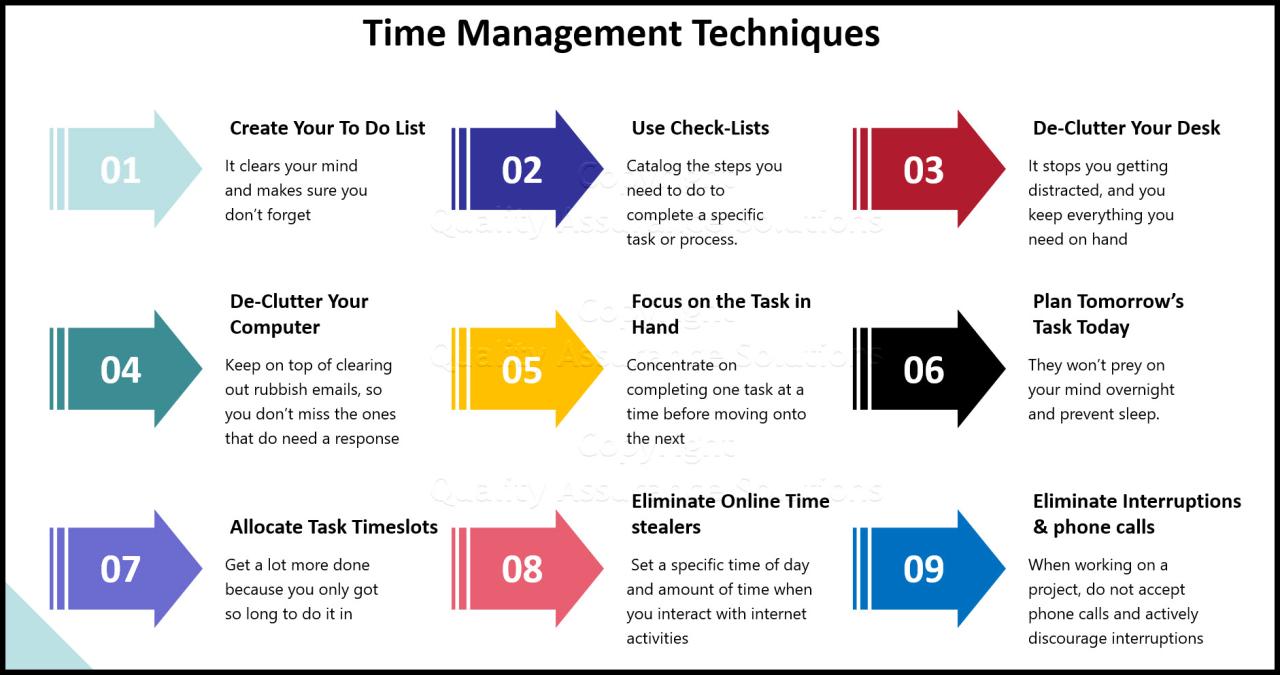
In today’s fast-paced world, technology has emerged as a crucial ally in effective time management. With the myriad of tools available, individuals can streamline their daily tasks and optimize productivity. From simple calendar apps to complex project management software, the integration of technology helps in organizing, prioritizing, and executing tasks efficiently.The array of tools and technologies that assist in time management varies significantly in functionality and complexity.
Some of the most popular tools include digital calendars, task management applications, and collaboration platforms. These tools allow users to set reminders, allocate time blocks for tasks, and collaborate with others seamlessly. For example, applications like Google Calendar and Microsoft Outlook not only provide scheduling functionalities but also integrate with other tools, ensuring a holistic approach to managing time.
Selection of Technological Tools Based on Individual Needs
Choosing the right time management tools can significantly impact productivity and efficiency. It is essential to consider personal habits, work style, and specific needs when selecting technologies. Below are key factors to evaluate:
- User Interface and Usability: Ensure the tool is intuitive and easy to navigate, allowing for quick adoption and minimal learning curve.
- Integration Capabilities: Look for tools that integrate well with existing software and applications you regularly use, such as email clients or file storage services.
- Features and Functionality: Assess whether the tool provides essential features, such as task prioritization, collaboration options, and mobile access.
- Cost and Budget: Consider whether the tool’s pricing fits within your budget, including any potential subscription fees for premium features.
- Customization Options: Select tools that allow personal customization to match your workflow and preferences.
The advent of mobile applications and software has revolutionized time management practices in both personal and professional settings. Mobile apps allow users to manage their schedules and tasks on-the-go, providing flexibility that traditional methods lack. For instance, apps like Todoist and Trello enable users to create task lists, set deadlines, and collaborate with team members directly from their smartphones.
“The right combination of technology and time management can lead to enhanced productivity and reduced stress.”
In professional environments, software solutions like Asana and Monday.com facilitate project management by breaking down tasks and assigning them to team members, while tracking progress in real-time. These platforms foster collaboration, ensuring that everyone stays on the same page, ultimately leading to better time utilization and project outcomes.Overall, technology plays a pivotal role in enhancing time management, providing tools that fit diverse needs and preferences.
By leveraging these technological advancements, individuals can significantly improve their ability to manage time efficiently, paving the way for greater productivity and success in their personal and professional lives.
Overcoming Common Time Management Challenges
Effective time management is essential for achieving personal and professional goals. However, various challenges can hinder one’s ability to manage time efficiently. Understanding these hurdles and implementing practical solutions can significantly enhance productivity and reduce stress. Below are some common time management challenges along with strategies to overcome them.
Identifying Common Time Management Challenges
Many individuals struggle with similar time management issues. Recognizing these challenges provides a foundation for developing solutions. The following points Artikel three prevalent time management challenges along with practical solutions.
- Procrastination: This is the act of delaying tasks, often leading to last-minute rushes. A common scenario is a student who puts off studying for exams until the night before. To combat procrastination, breaking tasks into smaller, more manageable parts and setting specific deadlines for each can help. Establishing a reward system for completing tasks can also motivate progress.
- Poor Prioritization: Many people struggle with determining which tasks are most important. For example, an employee might spend too much time on low-priority tasks, neglecting crucial projects. To address this, using a priority matrix can aid in distinguishing between urgent and important tasks. Regularly reviewing and adjusting priorities based on deadlines and impact can lead to better time allocation.
- Distractions: In a world full of distractions, maintaining focus can be difficult. Consider a scenario where an employee is frequently interrupted by notifications from email or social media. To minimize distractions, creating a designated workspace and scheduling specific times to check emails and messages can enhance concentration. Techniques like the Pomodoro Technique, which involves focused work sessions followed by short breaks, can also improve focus.
Comparison of Challenges and Solutions
Creating a clear comparison between common challenges and their respective solutions can enhance understanding and aid in the implementation of these strategies. The following table provides a concise overview:
| Challenge | Solution |
|---|---|
| Procrastination | Break tasks into smaller parts, set deadlines, and establish a reward system. |
| Poor Prioritization | Utilize a priority matrix and regularly review task priorities. |
| Distractions | Create a designated workspace, limit notifications, and use techniques like the Pomodoro Technique. |
“Effective time management is not about doing more things in less time, but about doing the right things at the right time.”
By addressing these challenges head-on and implementing practical solutions, individuals can foster a more productive environment, ultimately leading to enhanced time management capabilities and better overall performance.
The Psychological Aspects of Time Management
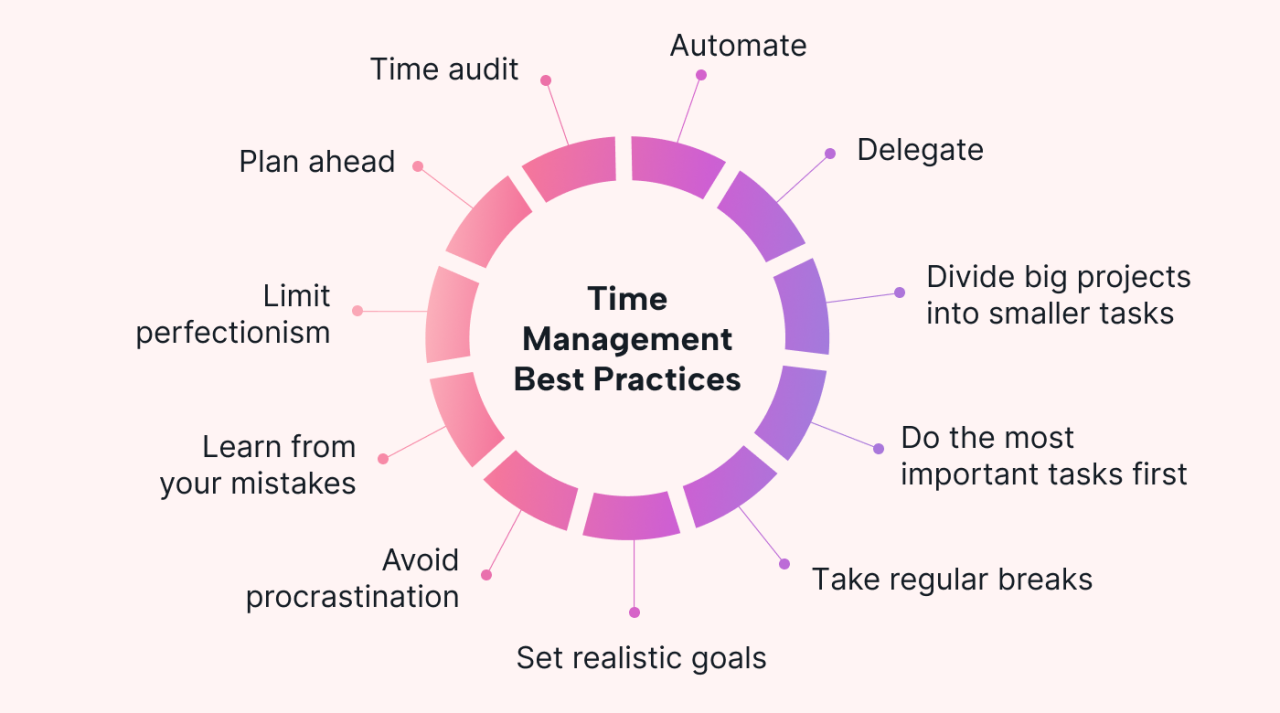
Effective time management is not solely about creating schedules or to-do lists; it also involves understanding the psychological barriers that can impede our productivity. These barriers often stem from internal beliefs and perceptions that shape our relationship with time. Acknowledging these psychological aspects can be the first step towards fostering better time management skills and ultimately achieving personal and professional goals.One of the most significant psychological barriers to effective time management is procrastination.
This often arises from fear of failure, perfectionism, or even a lack of motivation. Combatting procrastination requires a shift in mindset. Rather than viewing tasks as daunting or overwhelming, breaking them into smaller, manageable parts can alleviate anxiety. For instance, if faced with a large project, instead of focusing on the end result, setting milestones can create a sense of accomplishment as each one is achieved.
Mindset’s Role in Time Management
The significance of mindset in developing disciplined time management habits cannot be overstated. A positive mindset encourages resilience and adaptability, essential traits when navigating the complexities of managing time effectively. When individuals adopt a growth mindset, they become more open to learning from their experiences and mistakes, rather than feeling defeated by them. To illustrate the impact of mindset on time management, consider the research conducted by psychologist Carol Dweck.
Her studies show that individuals who believe their abilities can be developed (growth mindset) are more likely to embrace challenges and persist through difficulties. This contrasts with a fixed mindset, where individuals may give up easily due to setbacks. To cultivate a positive attitude towards time management, consider the following techniques:
- Practice self-compassion: Recognizing that everyone struggles with time management can reduce feelings of isolation and self-criticism.
- Set realistic goals: Aiming for achievable objectives can boost confidence and motivation, making it easier to manage time effectively.
- Celebrate small wins: Acknowledging progress, no matter how minor, reinforces positive behavior and encourages further efforts.
- Visualize success: Imagining the benefits of effective time management can create a motivational drive to implement necessary changes.
- Connect with supportive peers: Engaging with others who share similar goals can foster accountability and encouragement.
A personal anecdote highlights this point: when I struggled with managing my study time during university, I began to visualize the end result of my efforts—graduating with honors. This visualization not only motivated me to stick to my schedule but also transformed my perception of time from a stressor to a valuable resource.
“The way we perceive time can drastically influence our effectiveness; transforming this perception requires not just strategy, but a shift in our mindset.”
Cultivating a positive perspective on time management is essential for long-term success. The interplay between mindset and psychological barriers shapes how we approach our responsibilities, making it crucial to address these factors for improved personal and professional efficiency.
Developing a Personal Time Management Plan
Creating a personal time management plan is essential for achieving your goals effectively and efficiently. By organizing your tasks and prioritizing your time, you can reduce stress and enhance productivity. This guide will walk you through a step-by-step process tailored to your individual needs and aspirations.A personal time management plan should be grounded in clear, measurable, and achievable objectives. These objectives serve as milestones that not only guide your daily activities but also help you evaluate your progress over time.
Establishing these goals ensures that your efforts are aligned with your priorities, making your time management plan more effective.
Step-by-Step Guide for Creating a Personalized Time Management Plan
To develop a plan that caters specifically to your objectives, follow these steps:
1. Define Your Goals
Start by identifying both short-term and long-term goals. Consider what you want to achieve professionally and personally, and write them down.
2. Assess Your Current Time Usage
Keep a time log for a week to understand how you currently spend your time. This will help you identify areas for improvement.
3. Prioritize Tasks
Once you have a list of goals and a clear understanding of your current time usage, categorize your tasks based on their urgency and importance. The Eisenhower Matrix can be a useful tool here.
4. Create a Daily Schedule
Develop a daily schedule that incorporates your prioritized tasks. Allocate specific time blocks for each task, ensuring you also include breaks to recharge.
5. Set Measurable Objectives
For each task, set SMART (Specific, Measurable, Achievable, Relevant, Time-bound) objectives. This clarity will help you stay focused and motivated.
6. Review and Adjust
At the end of each week, review your progress. Identify what worked, what didn’t, and adjust your plan accordingly.Incorporating specific components into your time management plan enhances its effectiveness. Here’s a bullet list outlining essential elements:
Goal-setting framework
Clearly defined short-term and long-term goals
Time audit results
Insights from your current time usage
Priority matrix
A method to classify tasks by urgency and importance
Daily/weekly planner
A specific structure for scheduling tasks
SMART objectives
Achievable targets for each task
Reflection section
A dedicated space to evaluate your weekly progress
Flexibility
Room to adapt plans based on changing circumstances
“A goal without a plan is just a wish.” – Antoine de Saint-Exupéry
By following this step-by-step guide and incorporating these essential components, you will create a personalized time management plan that aligns with your goals and enhances your productivity. This structured approach not only helps in managing time effectively but also fosters a sense of accomplishment as you advance towards your objectives.
Time Management in a Team Environment
Time management is a critical skill in any collaborative setting, as it can significantly influence a team’s dynamics, productivity, and overall success. Effective time management promotes a structured workflow that helps team members align their efforts, meet deadlines, and achieve shared objectives. Striking a balance between individual schedules and group deadlines can enhance collaboration and create a positive working atmosphere.The importance of time management skills within a team cannot be overstated.
When team members manage their time efficiently, it leads to improved communication, enhanced accountability, and a sense of shared responsibility. This ultimately fosters a more cohesive team environment where tasks are completed on time. Poor time management can result in confusion, missed deadlines, and increased stress among team members, thereby affecting morale and productivity.
Methods for Fostering Better Time Management Practices
Implementing effective time management practices within a team requires collective efforts and strategies that encourage accountability and organization. Here are some methods to enhance time management in a team setting:
- Set Clear Goals and Deadlines: Establishing specific, measurable, achievable, relevant, and time-bound (SMART) goals provides clarity regarding expectations and timelines. This ensures every team member knows what is required and by when.
- Utilize Project Management Tools: Tools like Trello, Asana, or Microsoft Teams can help track progress and assign tasks. These platforms facilitate better communication and visibility of deadlines, leading to improved time management.
- Regular Check-Ins: Scheduling weekly or bi-weekly meetings to discuss progress encourages team members to stay on track and address any obstacles promptly. It promotes accountability and allows for adjustments to be made if necessary.
- Encourage Individual Time Management Training: Providing team members with resources or workshops on personal time management techniques can empower them to optimize their work habits, benefiting the entire team.
- Prioritize Tasks: Teaching teams to categorize tasks based on urgency and importance can streamline workflow. Using methods like the Eisenhower Matrix helps teams focus on what truly matters.
Effective time management can significantly affect team productivity and morale. For instance, a marketing team that successfully implements a content calendar can see a direct improvement in campaign execution. By outlining tasks and deadlines, teams can allocate resources more efficiently, leading to higher engagement rates and successful project outcomes. Conversely, when deadlines are missed due to poor time management, it can lead to frustration and burnout among team members.In another example, a software development team that utilizes agile methodologies often conducts sprint reviews.
By assessing their progress at the end of each sprint, team members can better manage their time for subsequent tasks, leading to improved delivery and a more motivated and satisfied workforce. In summary, the role of time management within a team environment is paramount, setting the stage for success through enhanced collaboration, productivity, and overall team morale.
Balancing Time Management with Flexibility
In today’s fast-paced world, the ability to manage time effectively while remaining flexible is crucial. Time management is often viewed as a rigid framework of schedules and deadlines, yet true productivity thrives on adaptability. Striking the right balance between structure and flexibility allows individuals and teams to respond to unexpected challenges without derailing their plans.Flexibility is essential in time management because it fosters resilience and creativity, enabling individuals to adjust their priorities as needed while still maintaining focus on their goals.
A rigid schedule might lead to burnout or frustration when unforeseen events occur. Therefore, incorporating flexibility within a structured time management plan can enhance overall productivity and satisfaction.
Techniques for Incorporating Flexibility
To seamlessly blend flexibility into your time management strategy, consider the following techniques that encourage adaptability while upholding productivity:
- Time Blocking with Buffer Times: Use time blocking to allocate specific periods for tasks but include buffer times between blocks. This ensures you have room to accommodate unforeseen interruptions or additional tasks without feeling overwhelmed.
- Prioritization of Tasks: Implement a priority matrix to categorize tasks based on urgency and importance. This approach allows you to quickly reallocate your efforts towards higher-priority tasks if plans change unexpectedly.
- Weekly Reviews: Schedule weekly reviews to assess your progress and adjust your plans accordingly. This reflective practice helps maintain a clear focus on your goals while allowing room for adjustments based on your experiences.
- Use of Technology: Leverage productivity tools and apps that offer flexibility. Many tools allow for task reordering, deadline adjustments, and shared calendars, enabling team members to adapt to changing situations effortlessly.
- Setting Realistic Deadlines: Aim for deadlines that are challenging yet achievable. When deadlines are set too strictly, they can generate unnecessary stress. A more realistic approach allows for adjustments without a loss in productivity.
“Flexibility in time management is not about abandoning structure; it’s about creating a dynamic framework that allows for change and growth.”
Case Studies of Successful Integration
Several organizations and individuals have successfully integrated flexibility into their time management strategies, showcasing the benefits of this approach.One notable example is Google, which encourages its employees to allocate 20% of their work time to projects of their choice. This practice not only spurs innovation but allows employees to work on what they are truly passionate about, resulting in increased productivity and job satisfaction.
The outcome of this flexibility has led to the creation of successful products like Gmail and Google News.Another example can be found in the realm of freelance work. Many freelancers adopt a flexible scheduling approach that allows them to work during their peak productivity hours, often leading to higher-quality output. For instance, a freelance graphic designer may choose to work late at night when they feel most creative, adapting their work hours around their personal life.Implementing flexibility into time management strategies does not mean sacrificing productivity; rather, it enhances it by allowing for a more responsive and resilient approach to tackling challenges and achieving goals.
The Long-Term Benefits of Effective Time Management

Effective time management is not just about keeping your schedule in check; it involves a strategic approach to how you allocate your time to accomplish your goals. Over time, adopting effective time management practices leads to significant long-term benefits that enhance both personal and professional development. By mastering these techniques, individuals can experience a transformative impact on their lives.One of the most profound advantages of effective time management is the ability to prioritize tasks, enabling individuals to focus on what truly matters.
When time is well-managed, stress levels can decrease substantially, leading to improved mental health and a better quality of life. This not only fosters a sense of achievement but also opens doors to opportunities that might otherwise be missed.
Personal and Professional Growth Opportunities
The practice of managing time effectively leads to numerous growth opportunities in both personal and professional realms. Here are several key advantages that arise from improved time management:
- Enhanced Productivity: By managing time wisely, individuals can accomplish more in less time, leading to increased output and effectiveness in both personal projects and professional tasks.
- Improved Decision Making: With well-structured time, individuals have the space to reflect and make informed decisions rather than rushing through important choices.
- Career Advancement: Professionals who manage their time effectively often find themselves considered for promotions and new responsibilities, as they demonstrate reliability and efficiency.
- Work-Life Balance: Effective time management allows individuals to allocate time for both work and personal interests, leading to a more fulfilling life overall.
Embracing these practices not only accelerates career growth but also enriches personal fulfillment and happiness.
“The key is in not spending time, but in investing it.” – Stephen R. Covey
“Time management is life management.” – Robin Sharma
These insights from successful individuals underscore the essence of time management as a fundamental pillar of personal development and achievement. Adopting these principles can lead to a more organized, productive, and ultimately successful life.

Hi, I’m Lauren. As a digital enthusiast and storyteller, I love breaking down complex ideas into easy-to-read articles. My goal is to provide readers with fresh perspectives and helpful solutions through every piece I write.