Understanding the role of Applicant Tracking Systems, or ATS, is crucial in today’s competitive job market. These systems are designed to streamline the hiring process by filtering resumes before they even reach human eyes. This technology has transformed the way job seekers must approach their applications, making it essential to craft ATS-friendly resumes that catch the algorithms’ attention. With the right knowledge and strategies, applicants can navigate this new terrain effectively.
The landscape of resume submission has shifted dramatically with the rise of ATS, requiring job seekers to rethink their approaches. By comprehending how these systems filter resumes based on specific criteria, candidates can tailor their documents to enhance visibility and increase the chances of landing interviews. In this guide, we will explore the key components of an ATS-friendly resume and share insights on how to optimize your application in line with best practices.





Understanding the Importance of ATS in Job Applications
The Applicant Tracking System (ATS) has become an integral part of the modern hiring process, revolutionizing how employers sift through numerous job applications. With the job market increasingly competitive, companies must rely on technology to streamline their recruitment efforts. ATS software has emerged as a powerful tool that enables organizations to manage large volumes of applications efficiently and effectively. By automating the initial stages of the hiring process, ATS systems help employers identify the most qualified candidates while saving time and resources.ATS systems analyze resumes and application materials, searching for specific s, phrases, and qualifications that match the job description.
This process significantly impacts job seekers, as the traditional methods of submitting resumes have evolved. Applicants must now tailor their submissions to align with ATS criteria, ensuring that their resumes are not only well-crafted but also optimized for automated screening. A well-structured resume can make the difference between being considered for a position or being overlooked entirely, highlighting the need for a strategic approach to resume writing in today’s job market.
Functionality of ATS Software in Filtering Resumes
Understanding how ATS software filters resumes is crucial for job seekers aiming to enhance their chances of getting noticed by employers. These systems operate based on algorithms designed to match candidates’ qualifications with the job requirements. Here are some key functionalities of ATS software:
Matching
ATS software scans resumes for specific s related to the job description. This includes industry jargon, required skills, and qualifications. Resumes without these s may be disregarded.
Formatting Analysis
The system examines the format of the resume to ensure it can be easily read and parsed. Resumes that use unconventional formatting, fonts, or graphics may not be processed accurately.
Experience and Skills Assessment
ATS systems evaluate the relevancy of a candidate’s work experience and skills in relation to the job. This assessment helps employers quickly identify the most suitable candidates.
Ranking Candidates
Many ATS platforms assign scores to applicants based on their resume’s alignment with the job description. Higher scores indicate a better match, allowing hiring managers to focus on top-ranked candidates.
Automated Communication
ATS can automate communication with candidates, providing updates on their application status, thereby improving the overall applicant experience.By understanding the functionalities of ATS, job seekers can tailor their resumes effectively, ensuring they meet the necessary criteria to move forward in the hiring process. This knowledge not only enhances their chances of landing interviews but also prepares them for the evolving landscape of job applications.
Key Components of an ATS-Friendly Resume
Creating an ATS-friendly resume is essential in today’s job market, where many companies use Applicant Tracking Systems (ATS) to filter resumes before they reach human eyes. Being aware of the key components that make a resume compatible with ATS can significantly enhance your chances of landing an interview. An effective ATS-friendly resume should include several essential elements that not only showcase your skills and experiences but also ensure the document is readable by the software.
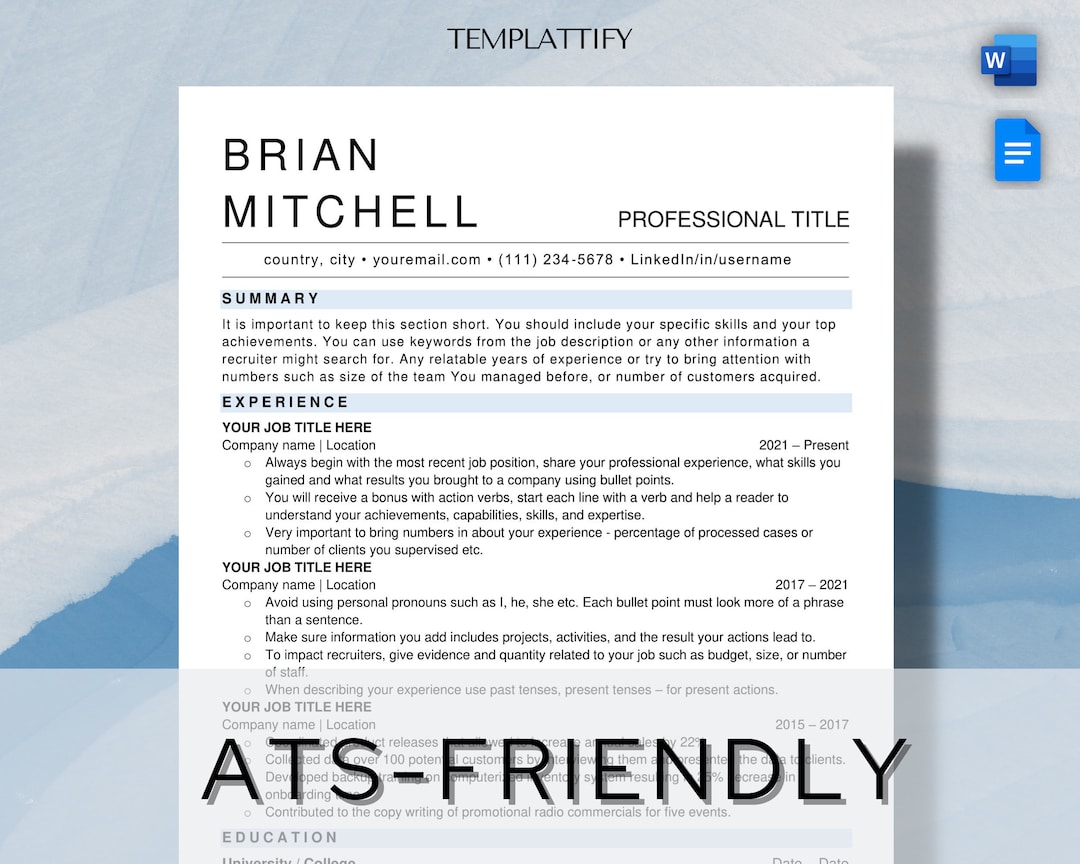
The primary components of an ATS-compatible resume include your contact information, a professional summary or objective, work experience, education, and skills. Each of these sections should be clearly labeled and formatted to facilitate easy scanning by the ATS.
Essential Elements for ATS Compatibility
The following elements are crucial to ensure your resume remains ATS-friendly:
- Contact Information: This should be located at the top of your resume and include your name, phone number, email address, and LinkedIn profile (if applicable). Avoid using fancy fonts or headers that could confuse ATS.
- Professional Summary: A concise summary at the beginning of your resume provides a snapshot of your qualifications and career goals. Use s relevant to the job you are applying for.
- Work Experience: List your work history in reverse chronological order. Include job titles, company names, locations, and dates of employment. Be sure to use standard job titles and bullet points to separate achievements.
- Education: Include your degree(s), the institutions attended, and graduation dates. If you have certifications or licenses relevant to the job, list those as well.
- Skills: Tailor this section with s from the job description. Use common industry terms and ensure they align with your experience.
Format and Structure to Enhance Visibility
The format of your resume is equally important for ATS compatibility. A simple, clean layout is preferred, with standard fonts like Arial, Calibri, or Times New Roman. Avoid tables, text boxes, and images as they can disrupt how ATS reads your resume. Use clear headings and bullet points for easy readability.
A clean and straightforward design maximizes ATS readability, ensuring that your qualifications are presented effectively.
Common Mistakes That Hinder ATS Effectiveness
Many candidates unknowingly make mistakes that can lead to their resumes being overlooked by ATS. These mistakes include using non-standard job titles or jargon that the ATS may not recognize, employing graphics or unusual formatting, or failing to incorporate relevant s from the job description. Additionally, submitting a resume in an incompatible file format, such as PDF, can also cause issues; most ATS prefer Word documents (.doc or .docx).
- Using Multiple Colors or Fonts: This can confuse the ATS and lead to misinterpretation of your content.
- Including Photos or Graphics: Visual elements often do not translate well in ATS, leading to gaps in information.
- Neglecting s: Failing to include specific industry s can result in your resume being filtered out.
Tailoring Your Resume for Specific Job Applications
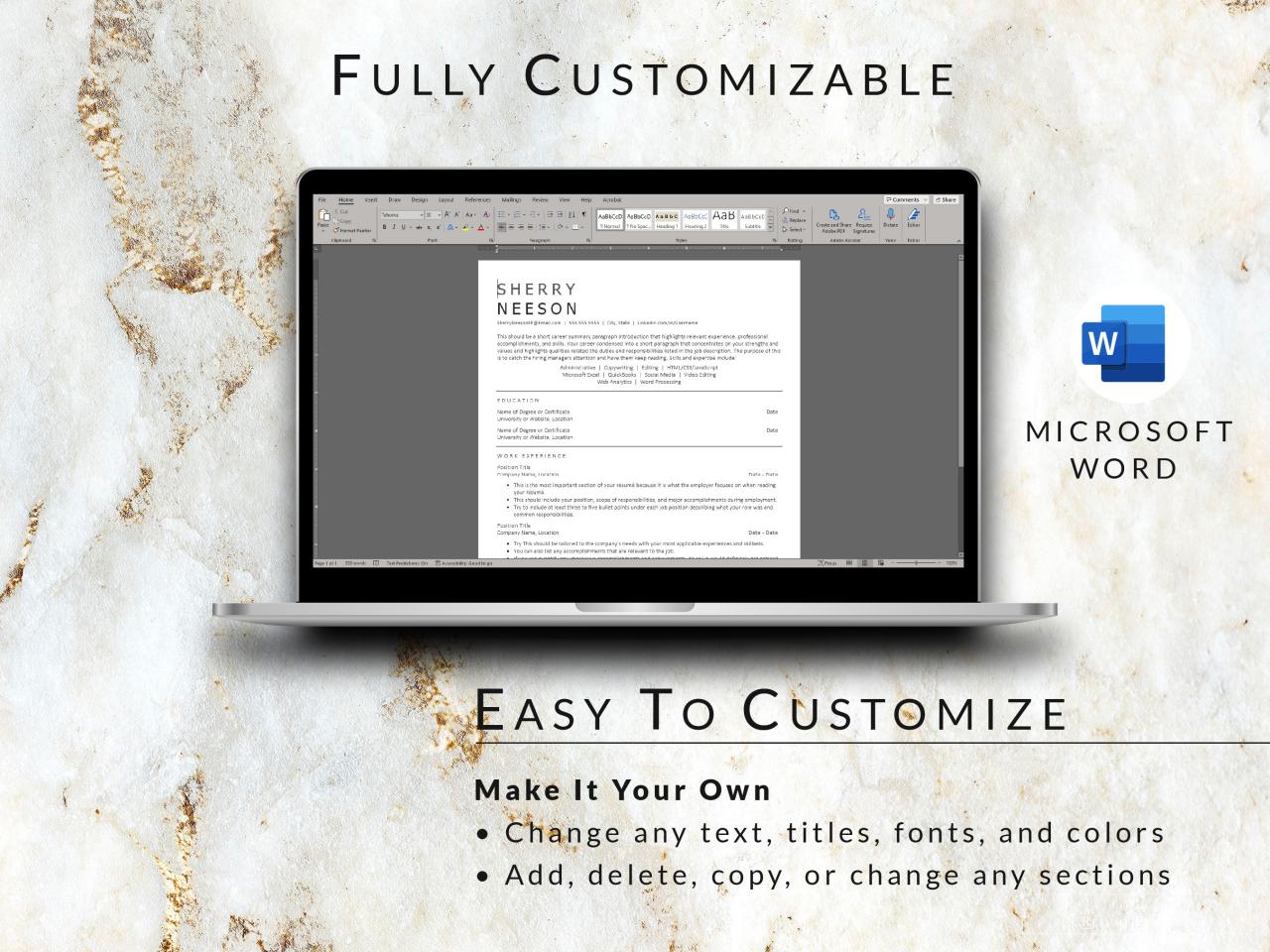
Customizing your resume for each job application is crucial in today’s competitive job market. Employers often receive numerous applications for a single position, and one of the most effective ways to stand out is by presenting a resume that highlights your most relevant skills and experiences tailored to the specific role. A generic resume may fail to capture the nuances of a job description, leading to a missed opportunity.
By aligning your qualifications with the job requirements, you increase your chances of getting noticed by hiring managers and passing through applicant tracking systems (ATS). Analyzing job descriptions thoroughly is the first step in the customization process. Each job posting contains specific language that reflects what employers value in a candidate. Identifying these s can dramatically improve your resume’s effectiveness.
The following steps can help you extract relevant s from job descriptions:
Steps to Analyze Job Descriptions for Relevant s
Begin by carefully reading the job description multiple times. Look for phrases and terms that are emphasized, as these often indicate essential qualifications and skills. Take note of any required experiences or certifications. Categorize these points into hard skills (technical abilities) and soft skills (interpersonal qualities).To facilitate this process, consider the following steps:
- Highlight important phrases and s that appear frequently.
- Identify the skills that are mentioned in both the responsibilities and qualifications sections.
- Make a list of industry-specific jargon that may be relevant to the role.
- Compare job descriptions from similar roles to spot commonalities.
Once you have identified the relevant s, the next step is to incorporate them into your resume effectively.
Methods to Incorporate s into Resume Content
Integrating s into your resume should be done naturally and contextually. Here are some methods to ensure that the s enhance rather than detract from your overall narrative:
- Use s in your professional summary to immediately capture attention.
- Incorporate them into your work experience section, especially in bullet points that Artikel your accomplishments.
- Utilize industry-specific terms in your skills section to further demonstrate your qualifications.
- Ensure that your education and certifications reflect the s relevant to the job.
Incorporating s not only helps your resume get past ATS but also resonates with human readers, showcasing that you align well with the company’s needs.
Common Myths About ATS and Resumes
Many job seekers harbor misconceptions about Applicant Tracking Systems (ATS) and their influence on the job application process. These myths can lead to unnecessary anxiety and improper resume crafting. Understanding the realities of ATS functionality can empower candidates to present their qualifications effectively without falling victim to common misunderstandings.A prevalent myth is that ATS pretends to evaluate resumes objectively, when, in fact, these systems rely heavily on algorithms that search for specific s and formatting.
Job seekers often believe that utilizing elaborate designs or non-traditional layouts will make their resumes stand out. However, ATS can struggle to parse complex designs, leading to crucial information being overlooked. This highlights the importance of maintaining a clean, straightforward format.
Myths Regarding Resume Length, Design, and Stuffing
It’s essential to recognize the misconceptions surrounding resume length, design, and usage when applying for jobs. Job seekers often think that longer resumes are better, believing that more information increases their chances of getting noticed. However, most hiring managers prefer concise resumes that clearly highlight relevant experience. Typically, a one-page resume is recommended for early-career candidates, while seasoned professionals may extend to two pages.
The key is to focus on quality over quantity.When it comes to resume design, many believe that eye-catching graphics will impress both ATS and human reviewers. In reality, ATS often struggles with interpreting graphics, tables, and unusual fonts. Instead, resumes should be formatted in a simple manner, using standard fonts and clear headings to ensure readability by both the ATS and hiring managers.Another common misbelief is that stuffing resumes with s guarantees a higher chance of passing ATS filters.
While s are undoubtedly important, excessive use can lead to an unnatural reading experience. Instead of focusing solely on quantity, candidates should incorporate relevant s naturally within the context of their experiences and achievements. This not only helps in passing ATS but also makes for a more compelling narrative for human reviewers.
Effective resumes balance ATS optimization with a clear and engaging narrative of the candidate’s professional journey.
Utilizing Technology to Optimize Your Resume
In today’s digital world, leveraging technology to enhance your resume is essential for standing out in the competitive job market. Applicant Tracking Systems (ATS) have become the norm for employers, making it crucial for candidates to ensure their resumes are optimized for these systems. By utilizing various tools and software, job seekers can create polished, ATS-friendly resumes that highlight their qualifications and experiences effectively.To maximize the impact of your resume within ATS, employ specific technologies designed to streamline the process.
Firstly, resume optimization tools can analyze your document against job descriptions to ensure proper usage, which increases the likelihood of passing through the ATS filters. Additionally, formatting tools help maintain a clean structure, ensuring that your resume is readable by both the ATS and human recruiters alike.
Popular ATS-Compliant Resume Builders
Many resume builders are specifically designed to create ATS-friendly resumes. Here’s a list of popular options that provide templates and features tailored for this purpose:
- Jobscan: This platform offers tools to compare your resume against job descriptions, ensuring it meets ATS criteria.
- Canva: Known for its user-friendly design capabilities, Canva also provides ATS-friendly templates that you can customize.
- Zety: This builder simplifies the resume creation process with templates and tips for optimizing content for ATS.
- ResumeGenius: Featuring a variety of templates, this tool guides you through the resume-building process while keeping ATS compliance in mind.
- Resume.io: Offers a plethora of ATS-compatible templates, making it easy to create a professional-looking resume.
Utilizing technology not only enhances the quality of your resume but also streamlines the creation process. Automation saves valuable time by guiding users in selecting the right s, formatting, and structuring their resumes. Furthermore, many tools offer real-time feedback, allowing you to make immediate adjustments that improve your chances of getting noticed by recruiters. As a result, leveraging technology minimizes the stress often associated with resume writing and allows you to focus on showcasing your qualifications and experiences effectively.
The blend of technology and creativity in resume building ensures that job seekers are well-prepared to navigate the competitive landscape of job applications.
The Role of s in ATS Resume Optimization
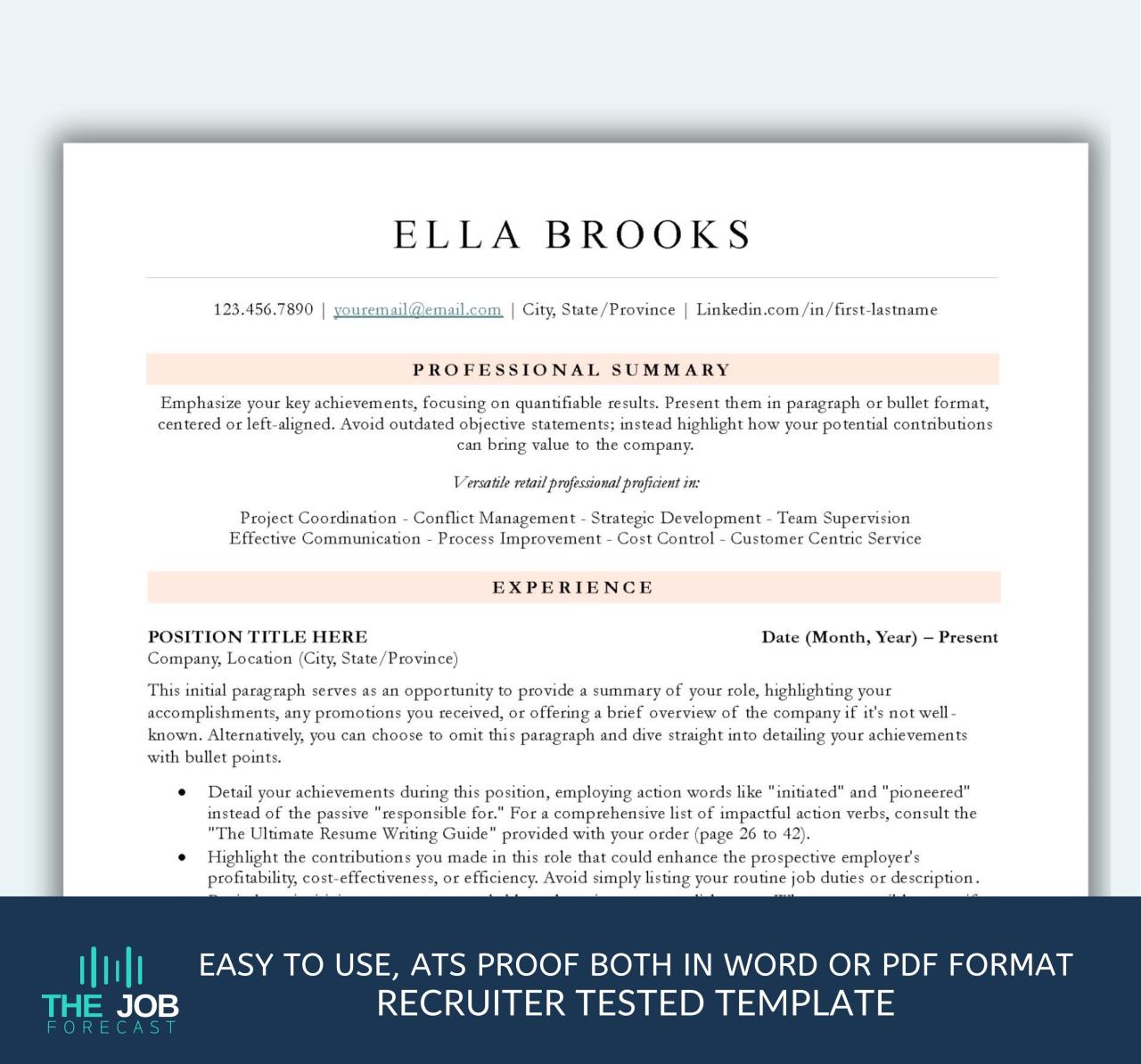
In today’s competitive job market, tailoring your resume to meet the specific requirements of an ATS (Applicant Tracking System) is crucial. One of the most significant elements in this optimization process is the strategic use of s and phrases. ATS software scans resumes for particular terms that relate to the job description and the skills necessary for the role. By effectively incorporating these s, job seekers can enhance their chances of passing through the initial screening, thereby landing on the desk of hiring managers.s serve as the bridge between a candidate’s qualifications and the job requirements Artikeld in a job posting.
They can include technical skills, industry-related jargon, certifications, and even soft skills. For instance, if a job description emphasizes “project management,” candidates should ensure that this phrase—and related terms—appear naturally in their resumes. This not only showcases relevant experience but also demonstrates familiarity with the language and culture of the industry.
Examples of High-Impact s by Industry
Utilizing the right s can vary significantly across different fields. Below are high-impact s relevant to several industries. These examples highlight the terms that may increase a candidate’s visibility in ATS:
- Information Technology: Agile, Cloud Computing, Cybersecurity, Data Analysis, Software Development, ITIL
- Healthcare: Patient Care, Electronic Health Records (EHR), HIPAA Compliance, Clinical Research, Telemedicine
- Marketing: , Content Strategy, Social Media Marketing, Brand Development, Market Research
- Finance: Financial Analysis, Risk Management, Investment Strategies, Budgeting, Account Reconciliation
- Engineering: CAD Software, Project Lifecycle, Lean Manufacturing, Quality Assurance, Technical Specifications
Incorporating these s requires a balance to maintain clarity and readability. Overloading a resume with s—often referred to as “ stuffing”—can lead to a disjointed reading experience and may be flagged by the ATS. Instead, candidates should focus on:
1. Contextual Use
Integrate s naturally within descriptions of past experiences and accomplishments.
2. Variations
Use both the exact phrases from the job description and their synonyms to cover a broader range of searches.
3. Action Verbs
Pair s with compelling action verbs to demonstrate impact and authority, such as “managed,” “developed,” or “implemented.”
Using s effectively does not just enhance ATS compatibility but also enriches the overall presentation of the resume, making it more appealing to human readers.
Formatting Tips for ATS-Friendly Resumes
Creating an ATS-friendly resume is crucial for job seekers today, as many employers utilize Applicant Tracking Systems (ATS) to filter candidates. Proper formatting is key to ensuring that your resume is easily readable by these systems. This not only optimizes your chances of passing the initial screening but also highlights your qualifications effectively to hiring managers.When formatting your resume for ATS compatibility, it’s essential to follow certain best practices.
These include using straightforward layouts, avoiding excessive graphics, and selecting appropriate fonts. ATS software struggles with complex designs and unconventional formats, so simplicity is your best friend. Here are some important points to consider:
Acceptable Fonts, Margins, and Layouts
The choice of font can significantly impact how your resume is processed by an ATS. Stick to standard fonts such as Arial, Calibri, or Times New Roman, as they are easy to read and widely recognized by ATS software. Font size should typically be between 10 to 12 points for body text, ensuring that your resume remains legible. Margins should be set to one inch on all sides, creating a clean border around your content.
This space prevents any cutting off of important information during processing. Additionally, use a single-column layout instead of a multi-column format, as ATS may misinterpret columns.
- Fonts: Arial, Calibri, Times New Roman
- Font Size: 10-12 points
- Margins: 1 inch on all sides
- Layout: Single-column preferred
The effectiveness of different formatting styles in ATS scanning can be quite varied. For instance, a resume with a header and multiple sections may do well for human readers but could confuse an ATS if it’s not formatted appropriately. Using standard section headings such as “Work Experience” and “Education” ensures that the ATS can easily categorize your information. Avoid using graphics, tables, or images, as these elements can hinder ATS from accurately reading your resume content.
The essence of an ATS-friendly resume lies in its simplicity and clarity, allowing both the machine and the human reader to grasp your qualifications without distraction.
Real-Life Success Stories of ATS-Friendly Resumes
The world of job applications can often feel daunting, especially with the prevalence of Applicant Tracking Systems (ATS) that screen resumes before they ever reach a human eye. However, many individuals have successfully navigated this landscape by creating ATS-compliant resumes that have led to interview invitations and job offers. This discussion highlights some inspiring case studies and testimonials from professionals who have effectively used these strategies to enhance their employability.These success stories reveal that a combination of tailored formatting, optimization, and strategic use of relevant experience can significantly impact one’s chances of being noticed by hiring managers.
For instance, professionals who meticulously crafted their resumes to align with job descriptions often found themselves standing out in a competitive job market. The strategies implemented by these successful candidates included:
Common Strategies Leading to Success
Individuals who achieved success in securing interviews through ATS-friendly resumes employed several key strategies. Here are some noteworthy themes and practices:
- Optimization: Candidates researched job descriptions thoroughly, pulling out relevant s that reflected the skills and qualifications the ATS would be scanning for. This ensured their resumes matched job requirements closely.
- Clear Formatting: Successful applicants used clean, simple layouts without complex graphics or unusual fonts. This formatting made it easier for ATS to parse their information accurately.
- Custom Headers and Titles: By customizing resume headings to reflect the position applied for, individuals increased their chances of being flagged by the ATS as relevant candidates.
- Quantifiable Achievements: Candidates highlighted specific accomplishments and results, using numbers where possible to demonstrate their impact and effectiveness in previous roles. For example, one candidate noted a 30% increase in sales through their efforts.
- Tailored Experience Sections: Instead of using a generic experience section, successful candidates emphasized relevant experiences and skills, ensuring that each resume was uniquely crafted for the target position.
“Tailoring your resume for each application is not just a nice-to-have; it’s a must to stand out in today’s job market.”
An example of this approach can be seen in the case of a marketing professional who, after struggling to get interviews, revamped their resume by incorporating specific industry jargon and metrics that reflected their previous successes. Within weeks, they received multiple interview invitations, illustrating the power of an ATS-friendly resume.Another inspiring case involved a recent college graduate who, by focusing on relevant internships and projects, crafted a concise and compelling resume that resonated with employers.
This graduate’s strategic use of s related to digital marketing led to their first job offer in a competitive field.These stories highlight how employing specific strategies not only increases visibility within ATS but also enhances overall presentation to human recruiters, ultimately leading to successful job placements.

Hi, I’m Lauren. As a digital enthusiast and storyteller, I love breaking down complex ideas into easy-to-read articles. My goal is to provide readers with fresh perspectives and helpful solutions through every piece I write.